Why Choose American Concrete Services? As a company, American Concrete Services was established in 2020 and we have been operating now for 4 years. Together we have over 50 years of experience in the construction industry, with endless resources to be able to deal with the most difficult problems that may arise. As a result, ACS believes that we have a goal every contractor should have… support the community and put out the best work we possibly can! How does ACS put out the best work? Knowledgeable Employees: American Concrete Service’s employees are provided with industry-leading technology. Also, they are provided with the same level of training for the technology to be use in the field. They use this knowledge to accomplish any project or job we go to. Knowledgeable employees = a successful job. Quality Products: When it comes to Polyurethane products, the supplier we use is the best on the market. They provide all the training necessary for application and the use of their products. Furthermore, our supplier assists in job planning to help with the more difficult jobs out there. See what our supplier has to say about finding a contactor. Hard Work Ethic: Since everything’s available at the push of a button these days, a hard work ethic can sometime be difficult to find. At ACS, we pride ourselves on continuing those good old fashion values of good customer service. Our employees want to put in the work to make sure the job is done correctly! We work hard to make sure that you are 100% satisfied with the quality of our work. American Concrete Services wants to show it off, but we want you to as well! Have a Concrete Future with ACS! Next Post
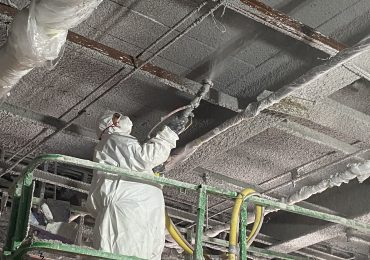
Fireproofing Fireproofing materials play a crucial role in mitigating the impact of fires on structures. However, they don’t completely prevent fire damage. They function by delaying the transfer of heat from the fire to the structural elements. Thereby buying valuable time for evacuation and firefighting efforts. There are two primary types of fireproofing materials: cementitious and intumescent. Cementitious materials, such as those made from gypsum, slag wool, Portland cement, and vermiculite, is applied as a thick paste via spraying onto structural supports. Once dried, they form a hard barrier that effectively slows down the fire’s progression. Intumescent fireproofing, on the other hand, is paint-based and offers a more aesthetically pleasing finish compared to cementitious materials. However, it tends to be more expensive. National and regional building codes determine the effectiveness of how fireproofing materials are evaluated and rated based on specific criteria. These ratings typically denote the duration (in hours) for which the material can withstand fire exposure. This includes the maximum temperature it can endure during that time. Common ratings include 1 hour, 2 hours, 3 hours, and 4 hours, depending on the application and location of the building. It’s important to note that while fireproofing materials can significantly enhance fire safety. However, their effectiveness can diminish over time depending on the severity and duration of the fire. Therefore, regular inspection and maintenance are essential to ensure continued protection. Previous PostNext Post
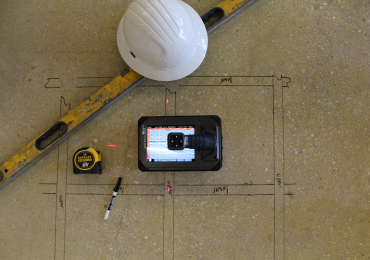
Ground Penetrating Radar Ground Penetrating Radar (GPR) is a tool used for non-destructive testing and surveying of subsurface structures in various materials. Below is a breakdown of its functionality and importance in the world of construction: Principle of Operation: GPR operates by emitting electromagnetic waves into the ground or concrete. These waves penetrate through different materials and reflect back to the antenna of the equipment. The signal is then processed to create a visual representation of the subsurface, typically displayed as a parabolic image on the machine’s screen. Frequency and Variables: The frequency of the electromagnetic waves used in GPR ranges from 10 MHz to 2.6 GHz. The choice of frequency depends on several factors: Ground Conditions: Moisture content and conductivity affect wave transmission. Material Type: Concrete is generally easier to scan than soil due to its lower water content. Depth of Object: Higher frequencies provide clearer images but do not penetrate as deeply as lower frequencies, which provide deeper penetration but may result in less detailed images Applications: Object Detection: GPR is used to locate underground utilities, pipes, conduits, rebar, and other structures. Void Detection: It can identify empty spaces or voids caused by settling, decay, or other factors. Safety in Construction: GPR helps prevent accidents during construction. GPR does this by ensuring that critical elements are not inadvertently damaged during core drilling, saw cutting, or demolition. Benefits: Safety: By accurately mapping subsurface features, GPR helps prevent damage to utilities and structures, thus enhancing safety for workers and avoiding costly repairs. Efficiency: It reduces the need for trial excavations or exploratory digging, saving time and resources. Accuracy: Modern GPR systems provide high-resolution imaging that aids in precise planning and decision-making. Limitations: While GPR is effective, it has limitations: Resolution vs. Depth: Achieving high resolution often means sacrificing the depth penetration and vice versa. Interpretation: Skill and experience are required to interpret GPR data accurately, especially in complex environments. In conclusion, GPR plays a critical role in modern construction and infrastructure projects by providing essential information about subsurface conditions. Its ability to detect objects and voids, coupled with its safety benefits, makes it a valuable asset for ensuring efficient and secure construction practices. Previous PostNext Post
How Can Polyurethane Foam Benefit You? Polyurethane foam lifting offers several significant advantages over traditional methos for repairing sunken concrete structures. 1. Structural Support: The polyurethane foam used is a closed-cell material known for its structural integrity. It provides robust support, making it suitable for a wide range of applications from residential driveways to heavy-duty infrastructure like highways and runways. 2. Efficiency and Cleanliness: The process is remarkably quick and clean compared to alternatives Drilling: We only drill a small 3/8th inch hole needed needed for the port of the polyurethane machine. Foam Injection: The foam is injected through the hole, expanding and filling voids beneath the concrete efficiently. Rapid Cure: Within minutes, the foam gains significant strength (90% within 15 minutes and fully cured within 45 minutes), allowing for immediate use of the repaired surface. Minimal Disruption: This process means there’s little mess involved, making it a convenient and hassle-free solution that minimizes disruption to daily activities. 3. Cost-Effectiveness: Polyurethane foam lifting generally proves more cost-effective than traditional methods like complete concrete replacement. This results in reduces labor costs due to its quick application and requires fewer resources and equipment. 4. Durability and Longevity: Once cured, the foam provides stable support to the lifted concrete. It is resistant to moisture and other environmental factors, ensuring durability and long-term reliability of the repaired structure. Overall, polyurethane foam lifting stands out as a superior choice for concrete repair. It’s due to its structural strength, efficiency, cleanliness, cost-effectiveness, and long-lasting performance. It is a versatile solution applicable to various concrete structures, offering a significant improvement over older repair methods. Previous PostNext Post
Mud Jacking VS Foam Lifting When people need their concrete leveled, they most likely come across two different options. The first option is mud jacking and the second is foam lifting. What are the differences between these two options? Which one will be better in the long run? Mud jacking has been around for decades and has been the go-to for a long time. This form of concrete raising involves drilling a hole a few inches in diameter through the concrete. The technicians then pump a slurry mix consisting of cement, soil, and water through the concrete. This process lifts the concrete back to its original height leaving a large hole in the concrete to be patched. The average slurry mixes when hardened averages close to an addition 100 LBS per square foot. This weight is directly connected to the slab. Eventually, the slab will sink more with the additional weight added. On the other hand, foam lifting uses foam instead of additional concrete. This method is known by a variety of names. Some names include polyurethane foam lifting, foam jacking, poly-leveling, concrete foam lifting, and much more. Foam lifting involves drilling a 3/8th inch hole in the concrete and using a foam gun to inject the chemical mixture underneath the slab. As soon as the mixture is underneath the concrete, it starts expanding and slowly raising the concrete. The foam doesn’t weight the slab down since its only weights 2-4 LBS per square foot. It also cures in rapid time and only takes 15 minutes to reach 90% strength. When the technicians are all done, covering the hole is very simple as it just needs a little bit of silicon caulk. What do you think now about mud jacking and foam lifting? Which one will be better for you in the long run? Previous PostNext Post
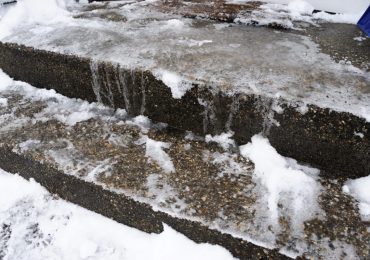
What is the Best Method to Protect Concrete this Winter? As winter is right around the corner, you may begin to wonder what the best method of treating concrete is. Although road salt is the most common method of treating snow and ice, is it safe for concrete? Are there alternative methods to treat concrete? Methods of Treating Concrete Road salt, or rock salt, has been around for decades and is used to treat roads and sidewalks. It helps to make it safer for drivers and pedestrians to drive or walk across. Road salt doesn’t melt the ice, but rather it lowers the temperature that water freezes at. Water naturally freezes at 32 degrees Fahrenheit, and with the salt, it starts to freeze at 15 degrees. When the freeze-thaw cycle occurs, the pores in the concrete absorb the water and salt when melted. The effects of the water and salt create pressure in the concrete when it freezes back, causing it to crack and break apart. The salt also speeds up the process of corrosion on cars and infrastructure. The chemical reaction of the salt and the metal it touches can create rust overtime. Even though this happens to concrete and infrastructure, it still is the most used deicer. The United States uses between 20-30 million tons of salt each year to treat roads. With a number like that, some may wonder if there’s a more effective way to treat concrete in the winter. One of the alternatives to salt is beet juice. Beet juice has similar effects to salt. The sugars in the juice help to reduce the freezing point of water when mixed with salt brine. In order to reap its full potential, the beet juice needs to be applied to the road or sidewalk before it starts to snow or ice over. However, when it is applied, it doesn’t bounce around like rock salt does. It is sticky and can last longer in the spot it was poured at rather than salt. It also is safe for concrete, plants, animals and metals. This is essential for protecting the longevity of concrete as it doesn’t lead to it breaking down over time. However, some of the downsides are you need a lot of beet juice, which can be expensive. It also has the potential to smell and can leave a temporary stain until it is washed away. Other Solutions Even though road salt and beet juice act as deicers, there still lies a bigger problem. Concrete is still exposed to both materials. How can a homeowner or business owner protect their property for the long run from deicers? The answer lies with Vetro Fluid. Vetro Fluid is a concrete sealant and is used by spraying a coat over the surface of the concrete. As we talked about earlier, concrete is a porous material, and this can lead to it cracking and breaking overtime when exposed to salt and different elements. By sealing off the surface of the concrete, it closes the pores and leaves a protective coating on top. This leaves a permanent solution to protect concrete against salt, the freeze-thaw cycle, and other products and elements in the environment. American Concrete Services offers concrete sealing with Vetro Fluid. We will come out and apply a coat to the top of the surface, leaving you with a protected sidewalk, driveway, or patio. This will provide protection for your concrete this winter and for years to come. Previous PostNext Post
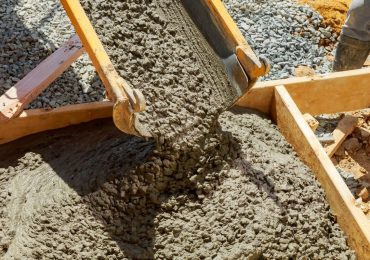
What is the Difference Between Cement and Concrete? Most people today don’t know the difference between concrete and cement. These two products get confused all the time in and outside of the construction world. In this article, we will discuss the difference between the two structural materials. By the end of the article, you will know the differences and how to protect concrete. Cement Portland cement is the most common cement in the world. This is because portland cement is made up of mostly clay, limestone, and sand, which are easy materials to obtain. These elements are crushed and heated into a substance called clinker. Clinker is then crushed and combined with other elements to create the cement that is universally used. Additionally, when adding water and sand to cement, it creates mortar. Mortar is used for many different things including sticking brick, stone, slate and many other things together. However, when adding sand, water, and stone to cement, it creates concrete. Concrete Concrete is a mixture of cement, water, aggregates, and other mixtures. All this combined material makes concrete strong and durable. Within 25-30 days of being poured and set, concrete normally reaches between 3,000- 4,000 PSI. However, other types of concrete can reach well beyond that strength and is mostly used for large buildings, bridges and dams. It’s the most used building material in the world. Everything from buildings to roads and bridges and tunnels, all can be made of concrete. Concrete is one of the many building materials that can last decades and even centuries. Of course, this is only possible with the right precautions. One of the precautions to take is sealing the concrete. Sealing the concrete helps protect it from road salt and moisture as well as chips and cracks. In the long run, it’s beneficial and adds to the curb appeal of the concrete. American Concrete Services offers a variety of concrete needs including new concrete and concrete sealing. Our professional technicians will come out and provide you with wonderful results that will last years to come. Previous PostNext Post
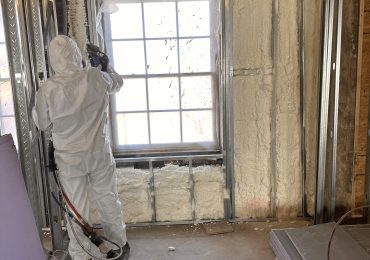
Spray Foam Insulation Spray foam insulation is a type of insulation material applied as a liquid that expands and hardens, creating a dense, airtight barrier. It is commonly used in both residential and commercial buildings to improve energy efficiency and enhance insulation performance. Here’s what you should know: Types of Spray Foam Insulation: Open-cell foam: Structure: The foam has small, open cells that allow air to fill the spaces. Properties: It is softer, less dense, and more flexible than closed-cell foam. R-Value: Typically between 3.5 and 4.0 per inch. Uses: Ideal for interior spaces, soundproofing, and areas that are less exposed to moisture. Closed-cell foam: Structure: The cells are completely closed, preventing air from entering. Properties: Denser, more rigid, and waterproof compared to open-cell foam. R-Value: Typically around 6.0 to 7.0 per inch. Uses: Best for exterior applications, basements, crawl spaces, and areas exposed to moisture. Advantages of Spray Foam Insulation: Energy Efficiency: Spray foam provides a high R-value per inch, making it one of the most efficient insulations available. It helps to reduce heat loss in winter and heat gain in summer, leading to lower energy bills. Air Sealing: Unlike traditional insulation, spray foam expands and fills gaps, cracks, and crevices, providing an excellent air seal. This prevents drafts and moisture infiltration, contributing to better indoor air quality. Moisture Resistance: Closed-cell foam, in particular, acts as a vapor barrier, which can prevent mold growth in areas like basements or attics. Noise Reduction: Spray foam can help reduce sound transmission, especially when used in walls or ceilings. Durability: Once applied, spray foam stays in place and maintains its integrity over time. It doesn’t settle or lose its effectiveness as some traditional insulation materials can. Disadvantages: Cost: Spray foam insulation can be more expensive than traditional insulation options like fiberglass or cellulose. The installation process also requires professional application. Installation: It must be applied by a licensed professional using specialized equipment. Improper application can lead to issues such as uneven coverage or exposure to harmful chemicals during installation. Health Considerations: The chemicals used in the insulation can release fumes during application, which can be hazardous if proper safety protocols are not followed. Proper ventilation is essential during installation. Applications: Attics: Spray foam can help to seal attic spaces, preventing heat loss through the roof. Crawl Spaces: It’s effective at insulating and preventing moisture buildup in crawl spaces. Walls: Spray foam can be applied between wall studs to improve insulation and air sealing. Basements: Closed-cell foam is ideal for areas prone to moisture like basements or foundations. Spray foam insulation is a highly effective and energy-efficient option, but its cost and installation complexity are factors to consider when choosing the right insulation for your needs. Previous PostNext Post